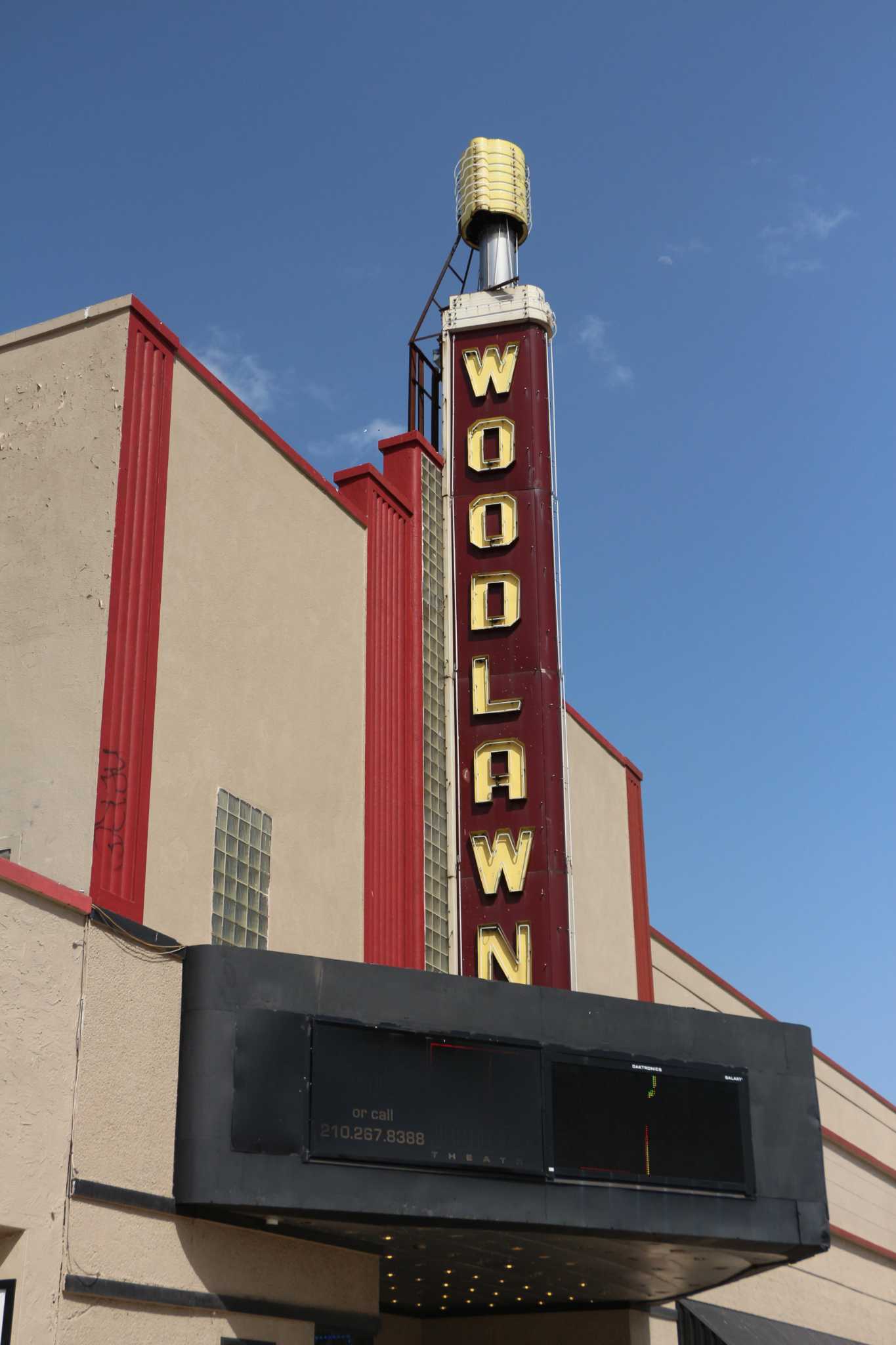
The Woodlawn Theatre has been listed for sale.
The Woodlawn Theatre has been listed for sale.
Photo: Courtesy PhotoThe Woodlawn Theatre on Fredericksburg Road was the site for the world premiere of the John Wayne film "The Alamo" on October 24, 1960. (UNITED ARTISTS)
The Woodlawn Theatre on Fredericksburg Road was the site for the world premiere of the John Wayne film "The Alamo" on October 24, 1960. (UNITED ARTISTS)
Photo: COURTESY UNITED ARTISTSClick ahead to see some of the oldest buildings in San Antonio.
Click ahead to see some of the oldest buildings in San Antonio.
This facility was started in 1866 at 239 E. Commerce by George Brackenridge, and is one of four charted banks in Texas.
This facility was started in 1866 at 239 E. Commerce by George Brackenridge, and is one of four charted banks in Texas.
This facility was started in 1866 at 239 E. Commerce by George Brackenridge, and is one of four charted banks in Texas.
This facility was started in 1866 at 239 E. Commerce by George Brackenridge, and is one of four charted banks in Texas.
This property was part of a labor or tract of land on the east side of the Alamo Acequia. It is reflective of the Lavaca neighborhood's oldest homes, and is made of caliche block.
This property was part of a labor or tract of land on the east side of the Alamo Acequia. It is reflective of the Lavaca neighborhood's oldest homes, and is made of caliche block.
This property was part of a labor or tract of land on the east side of the Alamo Acequia. It is reflective of the Lavaca neighborhood's oldest homes, and is made of caliche block.
This property was part of a labor or tract of land on the east side of the Alamo Acequia. It is reflective of the Lavaca neighborhood's oldest homes, and is made of caliche block.
The Catholic church wasn't finished until 1871, and parishioners were primarily German Catholic immigrants.
The Catholic church wasn't finished until 1871, and parishioners were primarily German Catholic immigrants.
The Catholic church wasn't finished until 1871, and parishioners were primarily German Catholic immigrants.
The Catholic church wasn't finished until 1871, and parishioners were primarily German Catholic immigrants.
Construction on the Arsenal started in 1858 and founded the following year, and was used to furnish arms and munitions to the frontier forts in Texas. In 1985, H-E-B bought ten acres of the Arsenal complex, refurbished the existing buildings, and moved their corporate headquarters to San Antonio from Corpus Christi.
lessConstruction on the Arsenal started in 1858 and founded the following year, and was used to furnish arms and munitions to the frontier forts in Texas. In 1985, H-E-B bought ten acres of the
... moreConstruction on the Arsenal started in 1858 and founded the following year, and was used to furnish arms and munitions to the frontier forts in Texas. In 1985, H-E-B bought ten acres of the Arsenal complex, refurbished the existing buildings, and moved their corporate headquarters to San Antonio from Corpus Christi.
lessConstruction on the Arsenal started in 1858 and founded the following year, and was used to furnish arms and munitions to the frontier forts in Texas. In 1985, H-E-B bought ten acres of the
... moreThe home was reconstructed at its present site in 1999, but it remains one of the oldest remaining homes in San Antonio. It was built by German immigrant John Kush on South Presa Street and was the home of short story writer O. Henry (William Sidney Porter) from 1895-1896.
lessThe home was reconstructed at its present site in 1999, but it remains one of the oldest remaining homes in San Antonio. It was built by German immigrant John Kush on South Presa Street
... moreThe home was reconstructed at its present site in 1999, but it remains one of the oldest remaining homes in San Antonio. It was built by German immigrant John Kush on South Presa Street and was the home of short story writer O. Henry (William Sidney Porter) from 1895-1896.
lessThe home was reconstructed at its present site in 1999, but it remains one of the oldest remaining homes in San Antonio. It was built by German immigrant John Kush on South Presa Street
... moreThis building is located in the 200 block of Perez Street, and has had several changes made to sustain it, such as a brick second floor and a metal shed.
This building is located in the 200 block of Perez Street, and has had several changes made to sustain it, such as a brick second floor and a metal shed.
This building is located in the 200 block of Perez Street, and has had several changes made to sustain it, such as a brick second floor and a metal shed.
This building is located in the 200 block of Perez Street, and has had several changes made to sustain it, such as a brick second floor and a metal shed.
French-trained architect Francois Giraud, along with Jules Poinard, built the first academy using the rammed earth method of construction. There were several additions made to the building over the years, including a chapel, a dormitory building, a priest's house and another academy building.
lessFrench-trained architect Francois Giraud, along with Jules Poinard, built the first academy using the rammed earth method of
... moreFrench-trained architect Francois Giraud, along with Jules Poinard, built the first academy using the rammed earth method of construction. There were several additions made to the building over the years, including a chapel, a dormitory building, a priest's house and another academy building.
lessFrench-trained architect Francois Giraud, along with Jules Poinard, built the first academy using the rammed earth method of
... moreThis was the home of early Texas patriot Jose Antonio Navarro, one of two native Texans who signed the Texas Declaration of Independence in 1836. The site is a historical landmark and includes a house, a two-story former office building and a former kitchen outbuilding. It's located off of South Laredo Street near Nueva.
lessThis was the home of early Texas patriot Jose Antonio Navarro, one of two native Texans who signed the Texas Declaration of Independence in 1836. The
... moreThis was the home of early Texas patriot Jose Antonio Navarro, one of two native Texans who signed the Texas Declaration of Independence in 1836. The site is a historical landmark and includes a house, a two-story former office building and a former kitchen outbuilding. It's located off of South Laredo Street near Nueva.
lessThis was the home of early Texas patriot Jose Antonio Navarro, one of two native Texans who signed the Texas Declaration of Independence in 1836. The
... moreThe Mill is located on the former labors of Mission Concepcion and can be dated no earlier than 1824, when Manuel Yturri Castillo received the grant of land with its corresponding water rights from the Mexican Government.
lessThe Mill is located on the former labors of Mission Concepcion and can be dated no earlier than 1824, when Manuel Yturri Castillo received the grant of land with its
... moreThe Mill is located on the former labors of Mission Concepcion and can be dated no earlier than 1824, when Manuel Yturri Castillo received the grant of land with its corresponding water rights from the Mexican Government.
lessThe Mill is located on the former labors of Mission Concepcion and can be dated no earlier than 1824, when Manuel Yturri Castillo received the grant of land with its
... moreThis small house is located at 305 Euclid and is the only remaining vestige of the Lewis property. It may also be one of the last remaining slave houses in San Antonio. It's believed to date back to the late 18th century, but research has shown it was likely built in the mid-19th century.
lessThis small house is located at 305 Euclid and is the only remaining vestige of the Lewis property. It may also be one of the last remaining slave houses in San Antonio. It's
... moreThis small house is located at 305 Euclid and is the only remaining vestige of the Lewis property. It may also be one of the last remaining slave houses in San Antonio. It's believed to date back to the late 18th century, but research has shown it was likely built in the mid-19th century.
lessThis small house is located at 305 Euclid and is the only remaining vestige of the Lewis property. It may also be one of the last remaining slave houses in San Antonio. It's
... moreThe home was once home to James Trueheart, a famous Perote prisoner in the 1842 Woll Invasion of Texas. Only four historic-age buildings remain on the property near the San Antonio River in south Bexar County.
lessThe home was once home to James Trueheart, a famous Perote prisoner in the 1842 Woll Invasion of Texas. Only four historic-age buildings remain on the property near the San
... moreThe home was once home to James Trueheart, a famous Perote prisoner in the 1842 Woll Invasion of Texas. Only four historic-age buildings remain on the property near the San Antonio River in south Bexar County.
lessThe home was once home to James Trueheart, a famous Perote prisoner in the 1842 Woll Invasion of Texas. Only four historic-age buildings remain on the property near the San
... moreRecords reporting the year of construction are sketchy, according to the Office of Historic Preservation. But the house is reported to have been built by 1801, with the De la Garza family living in the home. The Cantu family eventually owned the home from the 1840s until 1903. It's located on the Santa Rita de las Ysletas Ranch.
lessRecords reporting the year of construction are sketchy, according to the Office of Historic Preservation. But the house is reported to have been built by 1801, with
... moreRecords reporting the year of construction are sketchy, according to the Office of Historic Preservation. But the house is reported to have been built by 1801, with the De la Garza family living in the home. The Cantu family eventually owned the home from the 1840s until 1903. It's located on the Santa Rita de las Ysletas Ranch.
lessRecords reporting the year of construction are sketchy, according to the Office of Historic Preservation. But the house is reported to have been built by 1801, with
... moreThe 17-acre property hhas a jacal, which has adobe palasaido and "daub and wattle" construction techniques used by Tejanos. In 1883, Maria Herrera split the land among her children and 10 heirs. The ranch is located near the town of Von Ormy.
lessThe 17-acre property hhas a jacal, which has adobe palasaido and "daub and wattle" construction techniques used by Tejanos. In 1883, Maria Herrera split the land among her
... moreThe 17-acre property hhas a jacal, which has adobe palasaido and "daub and wattle" construction techniques used by Tejanos. In 1883, Maria Herrera split the land among her children and 10 heirs. The ranch is located near the town of Von Ormy.
lessThe 17-acre property hhas a jacal, which has adobe palasaido and "daub and wattle" construction techniques used by Tejanos. In 1883, Maria Herrera split the land among her
... moreThe house, along with the Governor's Palace, are the oldest residential structures remaining downtown. Located on Laredo Street, the home was known for being the headquarters for Texians during the Battle of Bexar in December 1835.
lessThe house, along with the Governor's Palace, are the oldest residential structures remaining downtown. Located on Laredo Street, the home was known for being the headquarters for
... moreThe house, along with the Governor's Palace, are the oldest residential structures remaining downtown. Located on Laredo Street, the home was known for being the headquarters for Texians during the Battle of Bexar in December 1835.
lessThe house, along with the Governor's Palace, are the oldest residential structures remaining downtown. Located on Laredo Street, the home was known for being the headquarters for
... moreThis is the reported location where Mexican General Martin Perfecto de Cos signed the articles of capitulation to the Texans. Under Ben Milam and Francis W. Johnson, the Texans took San Antonio in the Siege of Bexar in 1835 in the early on in the Texas Revolution. It's located at 503 Villita St.
lessThis is the reported location where Mexican General Martin Perfecto de Cos signed the articles of capitulation to the Texans. Under Ben Milam and Francis W. Johnson, the Texans took
... moreThis is the reported location where Mexican General Martin Perfecto de Cos signed the articles of capitulation to the Texans. Under Ben Milam and Francis W. Johnson, the Texans took San Antonio in the Siege of Bexar in 1835 in the early on in the Texas Revolution. It's located at 503 Villita St.
lessThis is the reported location where Mexican General Martin Perfecto de Cos signed the articles of capitulation to the Texans. Under Ben Milam and Francis W. Johnson, the Texans took
... moreThis small adobe and limestone building was sold by Francesca Bergara to LeComte de Watine in 1850 for $240. It's located in the 140 block of Guadalupe Street.
This small adobe and limestone building was sold by Francesca Bergara to LeComte de Watine in 1850 for $240. It's located in the 140 block of Guadalupe Street.
This small adobe and limestone building was sold by Francesca Bergara to LeComte de Watine in 1850 for $240. It's located in the 140 block of Guadalupe Street.
This small adobe and limestone building was sold by Francesca Bergara to LeComte de Watine in 1850 for $240. It's located in the 140 block of Guadalupe Street.
This was one of two homesteads the Herreras owned in the 1800s. This area was sold off to non-family members in the 20th century, but the Herrera Ranch has been owned by the original family members since March 26, 1845.
lessThis was one of two homesteads the Herreras owned in the 1800s. This area was sold off to non-family members in the 20th century, but the Herrera Ranch has been owned by
... moreThis was one of two homesteads the Herreras owned in the 1800s. This area was sold off to non-family members in the 20th century, but the Herrera Ranch has been owned by the original family members since March 26, 1845.
lessThis was one of two homesteads the Herreras owned in the 1800s. This area was sold off to non-family members in the 20th century, but the Herrera Ranch has been owned by
... moreThe chapel is the only thing left standing from Juan Ximenez's original homestead. The date on the cross on the tower states the chapel was built in 1813, but there is some evidence dating the construction to the 1850s and 1860s.
lessThe chapel is the only thing left standing from Juan Ximenez's original homestead. The date on the cross on the tower states the chapel was built in 1813, but there is some
... moreThe chapel is the only thing left standing from Juan Ximenez's original homestead. The date on the cross on the tower states the chapel was built in 1813, but there is some evidence dating the construction to the 1850s and 1860s.
lessThe chapel is the only thing left standing from Juan Ximenez's original homestead. The date on the cross on the tower states the chapel was built in 1813, but there is some
... moreJuan Ygnacio Perez, who was a grandson of an original Canary Island immigrant, came to San Antonio and established one of the earliest Spanish ranchos along the Medina River. He may started a ranch in the San Antonio area as early as 1780, but he didn't have the lands on the Medina River until about 1793.
lessJuan Ygnacio Perez, who was a grandson of an original Canary Island immigrant, came to San Antonio and established one of the earliest Spanish ranchos along the
... moreJuan Ygnacio Perez, who was a grandson of an original Canary Island immigrant, came to San Antonio and established one of the earliest Spanish ranchos along the Medina River. He may started a ranch in the San Antonio area as early as 1780, but he didn't have the lands on the Medina River until about 1793.
lessJuan Ygnacio Perez, who was a grandson of an original Canary Island immigrant, came to San Antonio and established one of the earliest Spanish ranchos along the
... moreThe home, made of limestone, sits within the former lands of Mission Concepcion and historic research states the home was the center for ranching operations for the entire land. Many historians say the home was occupied by Judge Roy Bean during the 19th century, while it's not entirely clear if Padre Navarro ever owned the land.
lessThe home, made of limestone, sits within the former lands of Mission Concepcion and historic research states the home was the center for ranching operations for
... moreThe home, made of limestone, sits within the former lands of Mission Concepcion and historic research states the home was the center for ranching operations for the entire land. Many historians say the home was occupied by Judge Roy Bean during the 19th century, while it's not entirely clear if Padre Navarro ever owned the land.
lessThe home, made of limestone, sits within the former lands of Mission Concepcion and historic research states the home was the center for ranching operations for
... moreThis building used to be the Church of La Villa de Bejar.
This building used to be the Church of La Villa de Bejar.
This building used to be the Church of La Villa de Bejar.
This building used to be the Church of La Villa de Bejar.
An acequia is a stone ditch used for irrigation in the old days. Pajalache Native Americans constructed the ditch in the early 18th century as a part of their irrigation system, according to www.waymarking.com. It began in La Villita and ended at Mission Concepcion.
lessAn acequia is a stone ditch used for irrigation in the old days. Pajalache Native Americans constructed the ditch in the early 18th century as a part of
... moreAn acequia is a stone ditch used for irrigation in the old days. Pajalache Native Americans constructed the ditch in the early 18th century as a part of their irrigation system, according to www.waymarking.com. It began in La Villita and ended at Mission Concepcion.
lessAn acequia is a stone ditch used for irrigation in the old days. Pajalache Native Americans constructed the ditch in the early 18th century as a part of
... moreThis structure has continued to provide a source of irrigation for farmers around Mission Espada. The Dam is the oldest existing dam in the country and the Aqueduct is the only existing one of the colonial period to exist in the United States.
lessThis structure has continued to provide a source of irrigation for farmers around Mission Espada. The Dam is the oldest existing dam in the country and the Aqueduct is the
... moreThis structure has continued to provide a source of irrigation for farmers around Mission Espada. The Dam is the oldest existing dam in the country and the Aqueduct is the only existing one of the colonial period to exist in the United States.
lessThis structure has continued to provide a source of irrigation for farmers around Mission Espada. The Dam is the oldest existing dam in the country and the Aqueduct is the
... moreBerg's Mill was located between the acequia and the river and Mission San Juan is located at the ditch's southernmost reach. The acequia is still tended by a traditional "Mayordomo," a person who protects the acequia system and manages the gates and sluices of the acequia to regulate the waterflow.
lessBerg's Mill was located between the acequia and the river and Mission San Juan is located at the ditch's southernmost reach. The acequia is still tended by a traditional
... moreBerg's Mill was located between the acequia and the river and Mission San Juan is located at the ditch's southernmost reach. The acequia is still tended by a traditional "Mayordomo," a person who protects the acequia system and manages the gates and sluices of the acequia to regulate the waterflow.
lessBerg's Mill was located between the acequia and the river and Mission San Juan is located at the ditch's southernmost reach. The acequia is still tended by a traditional
... moreThe priest's residence was finished in 1745 and the church was finished in 1756. A blacksmith shop, kiln for baking bricks, and work rooms with looms and spinning wheels were located inside the mission compound. A fire in 1826 destroyed most of the buildings at Espada. Only the chapel, granary and two of the compound walls remain.
lessThe priest's residence was finished in 1745 and the church was finished in 1756. A blacksmith shop, kiln for baking bricks, and work rooms with looms and spinning wheels
... moreThe priest's residence was finished in 1745 and the church was finished in 1756. A blacksmith shop, kiln for baking bricks, and work rooms with looms and spinning wheels were located inside the mission compound. A fire in 1826 destroyed most of the buildings at Espada. Only the chapel, granary and two of the compound walls remain.
lessThe priest's residence was finished in 1745 and the church was finished in 1756. A blacksmith shop, kiln for baking bricks, and work rooms with looms and spinning wheels
... moreSpanish designers built the mission using Texas limestone and brightly colored stucco. It provided sanctuary and a social and cultural community for more than 300 Native Americans, surrounded by acres of fields and livestock herds. It had its own granary and gristmill.
lessSpanish designers built the mission using Texas limestone and brightly colored stucco. It provided sanctuary and a social and cultural community for more than 300
... moreSpanish designers built the mission using Texas limestone and brightly colored stucco. It provided sanctuary and a social and cultural community for more than 300 Native Americans, surrounded by acres of fields and livestock herds. It had its own granary and gristmill.
lessSpanish designers built the mission using Texas limestone and brightly colored stucco. It provided sanctuary and a social and cultural community for more than 300
... moreThe Alamo was established by Father Antonio Olivares in 1718 for the Native Americans in the region. It has been located at three different spots around town, but its third and final location is at 300 Alamo Plaza.
lessThe Alamo was established by Father Antonio Olivares in 1718 for the Native Americans in the region. It has been located at three different spots around town, but
... moreThe Alamo was established by Father Antonio Olivares in 1718 for the Native Americans in the region. It has been located at three different spots around town, but its third and final location is at 300 Alamo Plaza.
lessThe Alamo was established by Father Antonio Olivares in 1718 for the Native Americans in the region. It has been located at three different spots around town, but
... moreOriginally established in East Texas in 1716, the mission was moved to the San Antonio River in 1731 after the cutback of Spanish troops at the military posts in 1729.
lessOriginally established in East Texas in 1716, the mission was moved to the San Antonio River in 1731 after the cutback of Spanish troops at
... moreOriginally established in East Texas in 1716, the mission was moved to the San Antonio River in 1731 after the cutback of Spanish troops at the military posts in 1729.
lessOriginally established in East Texas in 1716, the mission was moved to the San Antonio River in 1731 after the cutback of Spanish troops at
... moreThe San Juan Capistrano Mission used to be the East Texas mission of San Jose de los Nazonis before being renamed in 1731. At this same time, it was moved to its present site in San Antonio, 12 miles from the Alamo.
lessThe San Juan Capistrano Mission used to be the East Texas mission of San Jose de los Nazonis before being renamed in 1731. At this same time, it was moved to its present
... moreThe San Juan Capistrano Mission used to be the East Texas mission of San Jose de los Nazonis before being renamed in 1731. At this same time, it was moved to its present site in San Antonio, 12 miles from the Alamo.
lessThe San Juan Capistrano Mission used to be the East Texas mission of San Jose de los Nazonis before being renamed in 1731. At this same time, it was moved to its present
... moreThe Woodlawn Theatre is back on the market.
The asking price for the Deco District space is $1.95 million.
The theater was briefly listed for sale in December, sparking lots of social media buzz before the listing was removed. It was an asset in the divorce of co-owners Kurt Wehner and Sherry Redden Wehner.
The building is home to Woodlawn Theatricals, a community theater that operates in the main space, and Classic Theatre, which is based in an adjoining black box space.
RELATED:Woodlawn Lake, then and now
It is listed through Phyllis Browning Co.
Chris Berry is the real estate agent for the building. Berry also is an actor who often has appeared in shows on the Woodlawn stage.
Both Classic and Woodlawn Theatricals are in rehearsals for upcoming productions. Classic opens "Bless Me, Ultima" on Feb. 16. Woodlawn Theatricals is preparing to open "The Music of Andrew Lloyd Webber" on Feb. 23 and has announced five other productions this year. Its Woodlawn Academy education program just opened a chidlren's version of "The Lion King."
"The organization is not for sale," said Christopher Rodriguez, who is the company's artistic and executive director. "The building block is."
RELATED:Renderings show the proposed hotel to be built in the Aztec Theatre building
Rodriguez said he has been talking to the Wehners to make sure the transition goes smoothly.
"Basically it's business as normal for us," he said. "And, hopefully, with the sale of the theater, we can get someone who is invested in the Deco District and will really get behind us.
"I don't want our patrons or supporters to think, 'Oh, this is going to be the last of the Woodlawn.' We're still around, and we're not going anywhere."
The theater opened in 1946 as a movie theater. Among its claims to fame is that it was the site for the 1960 world premiere of the John Wayne movie "The Alamo." It was later converted into a live theater space.
The Wehners bought the space in 2012.
dlmartin@express-news.net | Twitter: @DeborahMartinEN


Tidak ada komentar:
Posting Komentar